
Coffee Urn Guide: Choosing the Right Capacity for Events, Offices, and Gatherings

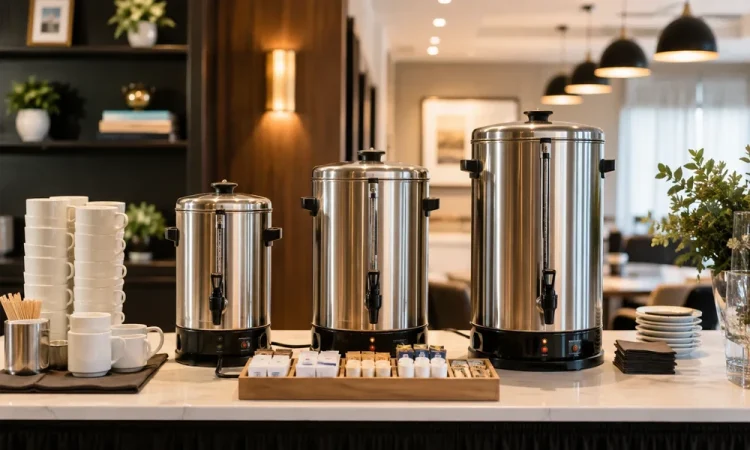

Serving coffee for a group becomes surprisingly complicated once a household brewer can no longer keep up. When twenty, fifty, or even one hundred people may want a cup within a short period, you need a setup that can brew enough coffee and keep it ready to serve. A coffee urn is designed for exactly that kind of situation, making it useful for offices, meetings, community functions, breakfast events, receptions, and catered gatherings.
The biggest question is usually size. Too little capacity means brewing again while guests are waiting. Too much can waste coffee, energy, and counter space. The key is to match the appliance to real demand rather than simply buying the largest model available. This guide explains how to estimate coffee urn capacity, understand common size ranges, and choose a practical unit for different types of group service.
Start With the Number of People You Need to Serve
Manufacturers often advertise large brewers by cup count, but those “cups” may be smaller than the mugs people use at home or in an office. A unit described as a 30-cup brewer, for example, may not fill thirty large 12-ounce mugs.
Guest count should therefore be your starting point, not your only measurement. Think about how many people are likely to drink coffee, how large their cups will be, and whether they may return for another serving.
A useful planning estimate is:
- 15-20 guests: Around 20-30 small servings may be enough.
- 30-40 guests: Consider roughly 40-60 servings.
- 50-75 guests: A larger unit or refill capacity is usually helpful.
- 80-100 guests: One high-capacity appliance or two medium units may work better.
These are practical estimates, not fixed rules. A morning conference may use far more coffee than an afternoon gathering where tea, juice, and cold drinks are also available.
Serving Size Matters More Than the Printed Cup Number
One of the easiest mistakes is assuming the advertised cup count equals the number of guests you can serve. In reality, cup sizes vary widely.
Small event cups may hold around 5-6 ounces, while office mugs often hold 10-12 ounces or more. If everyone uses a large mug, the practical serving count drops quickly.
Whenever possible, compare the total volume in liters or ounces. That gives you a more realistic picture than the marketing number alone. It also helps you calculate how much coffee you need if your event uses a specific cup size.
For self-service, leave some buffer for refills. Running out during a scheduled break is usually more disruptive than having a little left at the end.
Common Capacity Ranges and Best Uses
20- to 30-Cup Units
Smaller group brewers suit team meetings, family gatherings, workshops, and compact office kitchens. They are easier to lift, store, and clean than very large models.
This size works well when coffee is one of several beverage choices or when fewer than twenty people are likely to drink it at once.
40- to 60-Cup Units
This range is a useful middle ground for offices, training sessions, community gatherings, parties, and medium-size events. It provides flexibility without taking over the serving table.
A large coffee maker in this range can often handle a morning meeting or group breakfast without requiring constant attention.
80- to 100-Cup Units
Large events create a different challenge: peak demand. Even if a smaller machine could eventually make enough coffee, it may not serve a crowd quickly enough.
This size is more suitable for conferences, receptions, banquets, and large breakfast services. In some cases, two medium units are better than one oversized brewer because they create two serving points and reduce lines.
Choosing the Right Setup for an Office
Office coffee is often consumed gradually over several hours. The busiest period is usually early morning, so daily demand matters more than the total number of employees.
A compact coffee dispenser may work for a small team, while a larger workplace may need enough capacity to cover the morning rush without immediate refilling. Counter space matters too. A machine can look ideal on paper but become inconvenient if it blocks cabinets or is difficult to carry to the sink.
For everyday office use, prioritize easy cleaning, a visible fill level, reliable heat retention, and a smooth spigot. The goal is steady convenience, not maximum volume.
What Caterers and Event Hosts Should Consider
Event service is more demanding because many people may want drinks within the same ten- or fifteen-minute window.
A coffee urn for catering should be stable on the table, easy to refill, straightforward to transport, and simple for staff or guests to operate. Strong handles and durable construction are especially useful if the unit will be moved often.
Frequent professional use may justify a commercial coffee urn, particularly when the appliance must handle repeated service, transport, and cleaning. Occasional home or community use usually does not require the same level of heavy-duty construction.
Before deciding, it can help to compare different coffee urn sizes and layouts so you can see how capacity, handles, spigots, and overall dimensions vary.
Features That Matter Beyond Capacity
Size gets most of the attention, but everyday usability is just as important.
- Brewing speed: Important when a second batch needs to be ready quickly.
- Keep-warm function: Helps maintain a practical serving temperature.
- Spigot design: A good coffee dispenser should make self-service easy and allow cups to fit comfortably underneath.
- Handles: Filled appliances can be heavy, so sturdy handles make setup safer.
- Cleaning access: Wide openings and removable parts can save time.
- Build quality: Stainless steel is common because it is durable and easy to clean.
For events offering tea as well, a separate hot beverage dispenser can be useful for hot water. This keeps the beverage station organized and avoids mixing flavors in the same appliance.
One Large Unit or Two Smaller Ones?
Two medium brewers can sometimes be more useful than one very large coffee maker. They allow you to serve regular and decaf separately, create two serving stations, or keep one batch available while the other is being prepared.
The trade-off is space and power access. Two appliances require more table room and suitable electrical outlets. In a small venue, one larger unit may be simpler.
Think about how guests will move through the room. The best setup is not only about total volume; it is also about serving speed and layout.
Common Buying Mistakes to Avoid
Do not buy based only on advertised cup count. Compare liquid volume with the cups your guests will actually use.
Also avoid planning for exactly one serving per person. Morning meetings, cold-weather events, and long gatherings often generate refills.
On the other hand, bigger is not always better. Oversized equipment takes more room, can be harder to move, and may leave coffee sitting too long.
Finally, measure the serving area and check outlet access before buying. Leave enough room for cups, sugar, milk, stirrers, and safe movement around the appliance.
FAQs
How much capacity do I need for 50 people?
For 50 people, plan around cup size and likely refills rather than the guest number alone. If coffee is the main hot drink at a morning event, extra capacity is sensible. If several other beverages are available, demand may be lower.
Is a large coffee maker suitable for everyday office use?
Yes, if the size matches daily demand. A model that covers the morning rush can reduce repeated brewing, but an excessively large machine may waste space and leave coffee sitting longer than necessary.
Can I use a hot beverage dispenser for tea service?
Yes, if the model is approved for hot water or the beverage you plan to serve. Always follow the manufacturer’s instructions, especially for cleaning and temperature limits.
Is one large unit better than two smaller units?
Not always. Two smaller units can improve serving speed and make it easier to offer regular and decaf coffee separately. One larger unit may be easier when space or electrical access is limited.
Conclusion
Choosing the right coffee urn is less about finding the biggest appliance and more about understanding how people will actually use it. Start with the number of likely coffee drinkers, then factor in cup size, refills, event length, and how quickly guests will be served.
Smaller units work well for offices and family gatherings, mid-size models suit many meetings and community events, and higher-capacity equipment is better for large or fast-moving service. Features such as brewing speed, heat retention, portability, spigot design, and easy cleaning also make a noticeable difference.
When the size and serving setup match the occasion, coffee service becomes simpler, faster, and easier for both hosts and guests.