

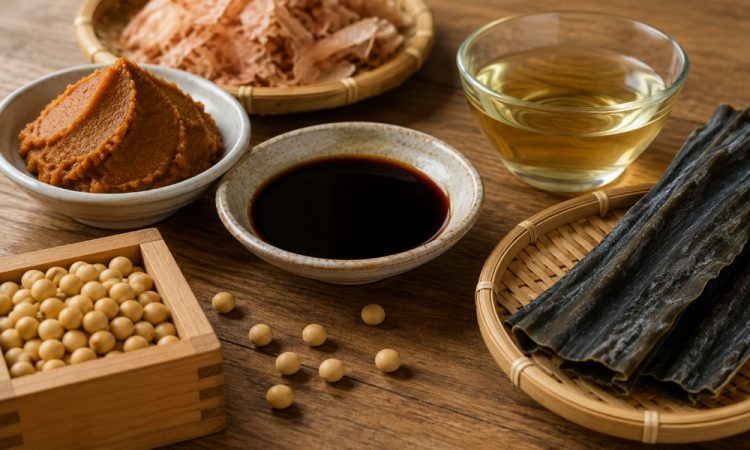
Japanese food is often described as clean, balanced, and deeply satisfying. A bowl of miso soup may look simple. A small dish of simmered vegetables may seem quiet. Even grilled fish with rice can feel plain at first glance. But once you taste it, there is usually a deeper flavor underneath.
That depth often comes from umami.
Umami in Japanese cuisine is one of the main reasons the food feels rich without always feeling heavy. It is that savory, rounded taste that makes broth more comforting, sauces more layered, and simple ingredients taste complete. Many of Japan’s most important flavor builders come from fermented or preserved staples like miso, shoyu, mirin, katsuobushi, and kombu.
These ingredients may seem small, but they carry a lot of power.
What Is Umami?
Umami is often called the fifth basic taste, along with sweet, salty, sour, and bitter. It gives food a savory quality. It can make a dish taste deeper, fuller, and more satisfying.
In Japanese cooking, umami does not usually shout. It works quietly. Instead of covering the main ingredient, it supports it. That is why a simple soup, noodle broth, or rice dish can taste layered even when the ingredient list is short.
Umami in Japanese cuisine comes from ingredients rich in natural compounds like glutamates and nucleotides. When these ingredients are combined, the savory effect becomes stronger. That is why Japanese broths and sauces often taste so complete.
Miso: Fermented Soybean Depth
Miso is one of the most well-known fermented staples in Japanese cooking. It is made by fermenting soybeans with koji, salt, and sometimes rice or barley. The result is a thick paste with salty, earthy, and savory flavor.
There are many kinds of miso. White miso is usually lighter and slightly sweet. Red miso is stronger, saltier, and deeper. Mixed miso sits somewhere in between.
Miso is most famous in miso soup, but it can do much more. It can be used in marinades, dressings, glazes, sauces, and vegetable dishes. A spoonful of miso can make a simple dish taste more rounded.
Because miso is fermented, it brings complexity that plain salt cannot provide. It adds body, aroma, and that warm savory note that makes food feel comforting.
Shoyu: More Than Just Saltiness
Shoyu, or Japanese soy sauce, is another essential source of umami. It is usually made from soybeans, wheat, salt, water, and koji. Through fermentation, it develops a salty, savory, slightly sweet flavor.
Many people think of soy sauce only as a salty seasoning. But good shoyu has more depth than that. It can add color, aroma, and richness to food. It is used in dipping sauces, simmered dishes, noodle broths, marinades, and stir-fries.
Shoyu also works well because it blends into dishes easily. A small amount can sharpen flavor without making the dish taste only like soy sauce. It is one of the quiet backbone ingredients in many Japanese meals.
Mirin: Sweetness With Depth
Mirin is a sweet rice-based seasoning used often in Japanese cooking. It adds gentle sweetness, shine, and balance. While it is not savory in the same way as miso or shoyu, it helps support umami by softening salty and strong flavors.
Mirin is often used with shoyu in sauces and glazes. This combination creates a sweet-salty balance that appears in many dishes, from teriyaki-style preparations to simmered vegetables and fish.
It also helps reduce sharp odors in fish and meat. That small detail matters. Mirin does not just make food sweeter. It helps make flavors feel smoother and more connected.
Katsuobushi: Smoky, Savory Power
Katsuobushi is dried, fermented, and smoked bonito. It is usually shaved into thin flakes. These flakes are light and delicate, but the flavor is strong.
Katsuobushi is one of the main ingredients in dashi, the basic broth used in many Japanese dishes. When combined with kombu, it creates a broth that is clear, savory, and deeply aromatic.
The flavor of katsuobushi is smoky, ocean-like, and rich. It gives food a savory lift without needing heavy fat or strong seasoning. It can also be sprinkled over tofu, vegetables, rice, or noodles for added flavor and movement.
Kombu: The Quiet Source of Umami
Kombu is dried kelp. It may not look exciting, but it is one of the most important umami ingredients in Japanese cooking. Kombu is naturally rich in glutamate, which gives broth a deep savory taste.
When kombu is soaked or gently heated in water, it releases flavor slowly. This creates a clean, mineral-rich base for soups, stews, sauces, and noodle broths.
Kombu is often paired with katsuobushi to make dashi. Together, they create a stronger umami effect than either ingredient alone. This is one reason dashi can taste so full even though it is light and clear.
Why These Ingredients Work Together
Japanese cooking often uses balance instead of excess. Miso, shoyu, mirin, katsuobushi, and kombu each bring something different.
Miso adds fermented richness. Shoyu adds salty depth. Mirin adds sweetness and polish. Katsuobushi adds smoky savory flavor. Kombu adds clean ocean-like umami.
Together, they create layers. A soup can taste warm and deep. A sauce can feel glossy and balanced. A simple vegetable dish can taste complete.
This is the real strength of umami in Japanese cuisine. It lets simple food feel thoughtful and satisfying.
Final Thoughts
The umami factor in Japanese cooking comes from patience, fermentation, and smart layering. Ingredients like miso, shoyu, mirin, katsuobushi, and kombu may not always stand out on their own, but they shape the flavor of many beloved dishes.
They make food taste deeper without making it heavy. They add comfort without needing too much richness. Most of all, they show how powerful simple staples can be when used with care.
That is why Japanese flavor feels so memorable. It is not only about what is added. It is about how each ingredient supports the next.
This post was written by a professional at Fortu. Fortu stands out among the top Restaurants St Petersburg FL, offering an elevated Pan-Asian dining experience in the heart of St. Petersburg, Florida. Celebrating Asia’s vibrant and diverse culture, Fortu introduces bright and bold flavors to a bright and bold city with a menu of locally and sustainably sourced options, from small bites to hearty delicacies. Whether winding down from a beach day or celebrating a special occasion, guests can enjoy a lush, alluring atmosphere and an authentic taste of Asia’s divine cuisine at one of the finest Pan-Asian Restaurant.