
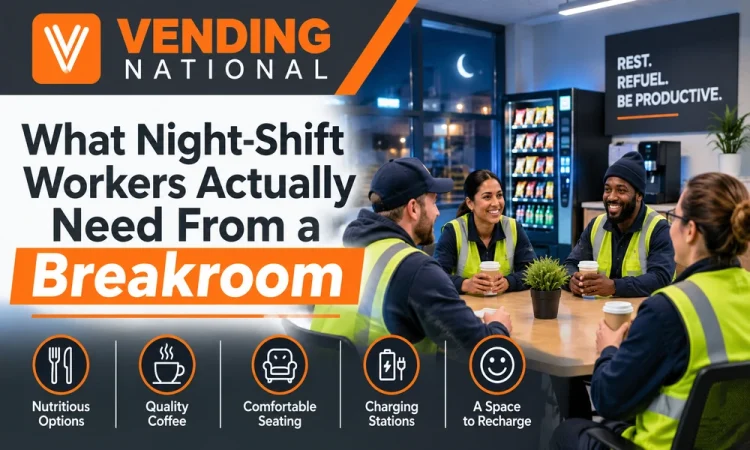
At 1:30 in the morning, the workplace food landscape is very different. The nearby restaurants are closed, the cafeteria has been dark for hours and the employee who forgot lunch may have another six hours left in the shift. A breakroom that looks fully stocked at noon can feel abandoned overnight.
This is where a well-planned vending program becomes more than an office perk. For manufacturing plants, warehouses, hospitals and other round-the-clock operations, it may be the only dependable food and beverage option available to part of the workforce. The product mix, machine capacity and service schedule should be built around that reality rather than copied from a daytime office.
Start with who is present when the route driver is not
Payroll headcount does not tell the full story. A facility with 180 employees may have 45 onsite overnight, while another location changes shifts in a rush that puts 100 people in the breakroom at once. When we know attendance by shift, break times and the days the plant operates, we can plan machine capacity, restocking frequency and a fresh-food selection that stays reliable.
Night workers often want more than candy and soda. Filling items, familiar sandwiches, protein choices, coffee, cold drinks and a few healthier options make the service feel useful. Fresh food should be added at a level the location can support. A smaller selection that is rotated carefully is better than an impressive cooler that becomes inconsistent after the launch week.
Payment should be easy when no manager is around to help. Cards and mobile wallets reduce dependence on exact change. Refund instructions and a visible service number keep a failed vend from becoming an issue the shift supervisor has to solve. Lighting, seating and machine placement matter too. Employees should not have to cross an active production route or walk to an isolated corner to use the breakroom.
Service quality shows up after midnight
Sales data tells us what the overnight shift is actually choosing. Popular drinks can disappear during the evening even when the machine looked full in the morning. Product-level reporting shows which selections need more room and which ones should make way for something better. We can keep adjusting the mix instead of repeatedly stocking a generic assortment that does not fit the people using it.
Repair response is equally important. A machine that fails on Friday night may be the only refreshment option until Monday. Vending National’s information on leasing and full-service vending machines shows how we bring the equipment, stocking and maintenance together as one continuing service.
The breakroom can also carry some of the culture of the night shift. Products requested by those employees, a dependable coffee option and visible attention to restocking show that the program was not designed only for people who work nine to five. We can use early sales patterns and direct requests to make the selection feel more local to that workplace instead of treating every machine as identical.
Season and workload matter too. A warehouse may need more cold drinks during summer, while a plant entering its busiest production period may see greater demand for substantial food. A service plan should be able to respond to those changes. The machine is fixed in place; the program inside it should keep learning.
A successful program depends on regular use, so we want to understand the location, attendance by shift, operating hours and current breakroom options. That lets us shape workplace vending service around the demand that is really there. For the people working while the rest of the city sleeps, a dependable breakroom says something simple and important: this shift was included in the plan.
By the Vending National team