

Selections vary, why?
Regional identity, meal occasion, and centuries of local craft shape which sausage appears on a German table. No two regions agree on what belongs at breakfast, a street stall, or a Sunday spread.
Germany carries over 1500 recorded sausage varieties. Not excess. A reflection of how deeply food tradition differs from one region to the next and how seriously local craft is taken. A sausage belonging at a Bavarian breakfast table has no business at a Berlin street stall, and locals would say so without hesitation.
Variety in german sausage culture is not about options. Each variety sits within a specific tradition, giving it context, occasion, and meaning. Pull it out of that setting, and something is lost. Put it back, and it makes complete sense as part of a food culture centuries in the making.
Regions drive variety
Germany’s food culture makes each region genuinely distinct from its neighbours. What that looks like across specific selections:
- Bavaria favours fresh and pale – Weisswurst, which sits at the centre of Bavarian morning tradition. Eaten before noon, served with sweet mustard and a soft pretzel. Ordering one after midday marks someone as an outsider immediately.
- Thuringia protects its bratwurst – The Thuringian bratwurst holds a protected geographical status. One place, one recipe. A regional identity as much as a food product.
- Nuremberg runs small by design – Nuremberg rostbratwurst comes in multiples, six or eight at a time. Never a single portion. That format is part of what the sausage is and how it has always been eaten.
- Bremen ties sausage to the season – Pinkel appears during a winter dish eaten with kale. So tied to local tradition, the eating season carries its own name in the regional calendar.
Occasion shapes choice
Breakfast looks nothing like a street grill or a Sunday table. Each occasion carries its own selection logic built from tradition.
- Morning eating favours fresh varieties – Southern German breakfast tables carry lightly seasoned, freshly prepared sausage eaten warm. Bread, mustard, and sometimes a mild radish alongside. Nothing smoked, nothing heavy.
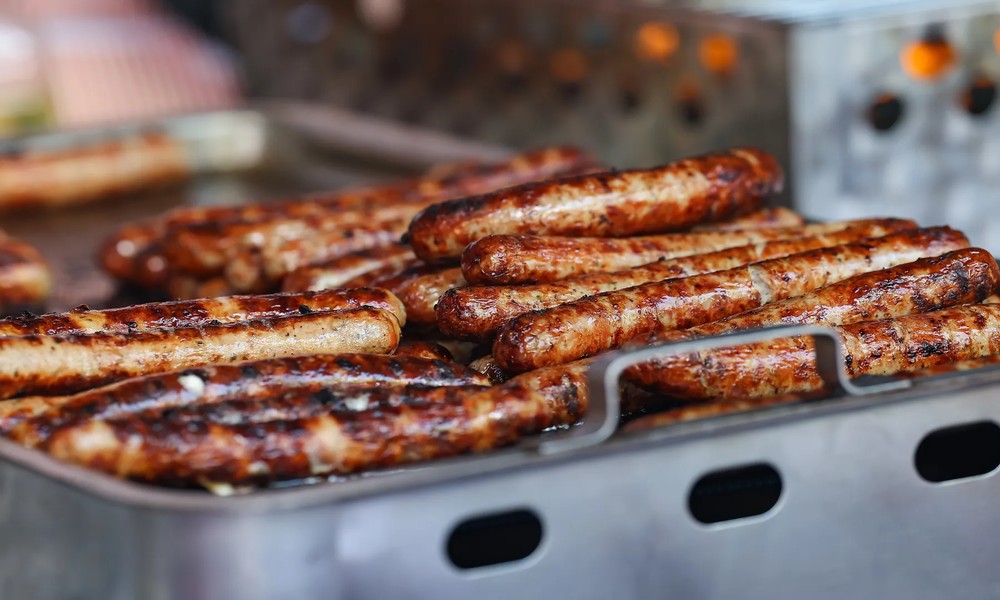
- Street food runs grilled, and fast – Market stalls built a food culture around sausage eaten standing. Berlin’s currywurst sits under spiced tomato sauce. Thuringian bratwurst goes over an open flame. Each version carries its own tradition behind the simplicity.
- Sunday tables slow everything down – Smoked and cured selections suit the Sunday pace. Cold cuts across dark bread, warm smoked varieties alongside roasted accompaniments, regional specialities that rarely appear midweek because the occasion justifies seeking them out.
Tradition resists uniformity
- Protected designations kept recipes intact – Geographical protections mean certain names belong to certain places. A bratwurst made outside Thuringia cannot carry that name regardless of how closely the recipe follows the original. Legal protection kept the regional identity attached to the product rather than becoming a label anyone could apply.
- Local butchers kept variety alive – Varieties that never scaled commercially survived because local producers kept making them for the people nearby. The customer base was never global. Next street, next village, next market day. That closeness kept recipes breathing long after larger producers moved on.
Every sausage on a German table got there through a specific place, a specific tradition, and a specific occasion that shaped it long before anyone thought to write the recipe down.